SUN · ECLIPSE COMMAND CENTER
The 2026 Total Solar Eclipse
On Wednesday, August 12, 2026, the Moon's shadow sweeps from Arctic Siberia across Greenland and Iceland to northern Spain — mainland Europe's first total solar eclipse since 1999. A partial eclipse is visible across nearly all of Europe, North Africa and northeastern North America. Here's the live countdown, the path, and what it looks like from 59+ cities.
Source: NASA Goddard eclipse canon (Espenak & Meeus). Eclipse circumstances are predicted decades ahead and are effectively fixed. The countdown targets the instant of greatest eclipse (5:46 PM UTC); totality reaches each place along the path at slightly different local times.
Don't miss it
A total eclipse over mainland Europe is a once-in-a-generation event, and it all happens on a single afternoon. Leave your email and we'll send one reminder the morning of Wednesday, August 12— a few hours before totality — so it doesn't slip past you.
One email on the morning of Wednesday, August 12(UTC), a few hours before totality — then we're done. Double opt-in: we'll send a confirmation link first, and you can unsubscribe in one click any time.
Where the shadow falls
The accessible heart of the path — eastern Greenland, western Iceland and northern Spain. The full track begins in remote Arctic Siberia; the map below shows the North Atlantic and European leg where most eclipse-chasers will head.
● on the path of totality · ● a partial eclipse. The dashed line is the indicative centre-line — the true band of totality is narrow; see NASA's exact path map ↗ for precise limits. Coastline: Natural Earth.
On the path — city by city
Cities on or near the path of totality. The Sun's height is its altitude at the instant of greatest eclipse — from Iceland it's still well up; across Spain it sinks toward the horizon, and in the Balearics the eclipse happens right at sunset. Get exact local contact times from NASA nearer the date.
| City | Local date | At greatest (local) | Sun's height | Notes |
|---|---|---|---|---|
| Reykjavík · Iceland | Wed, Aug 12 | 5:46 PM | 25° | Western Iceland sits under the track with the Sun still fairly high — the best-placed capital on the path. |
| Oviedo · Spain | Wed, Aug 12 | 7:46 PM | 18° | Asturias, northern Spain — on the mainland track, with the Sun low toward the west. |
| Bilbao · Spain | Wed, Aug 12 | 7:46 PM | 16° | The Basque coast, near the northern edge of the track — check NASA for the exact limit here. |
| Zaragoza · Spain | Wed, Aug 12 | 7:46 PM | 14° | Aragón — squarely on the mainland track as the shadow races toward the Mediterranean. |
| Valencia · Spain | Wed, Aug 12 | 7:46 PM | 13° | The Mediterranean coast, toward the southern edge — the Sun is very low near sunset here. |
| Palma · Spain | Wed, Aug 12 | 7:46 PM | 11° | The Balearics catch totality at the very end, with the Sun on the horizon at sunset. |
Clear sky on the path?
Totality lasts a couple of minutes — and clouds can steal it. This is the one thing no live tracker offers: the forecast cloud cover at the eclipse hour for each city on the path, ranked so the best-placed spots stand out. It's a steer for chasers deciding where to stand, not a substitute for checking the sky yourself on the day.
Checking the cloud outlook along the path…
See it from your city
Almost everywhere in the partial zone — most of Europe, North Africa and northeastern North America — the Sun is partly covered. How deep the bite is, and the exact local time, depends on where you stand. Open your city's page for the local detail (the Sky canvas computes it per location):
Watch the Sun right now
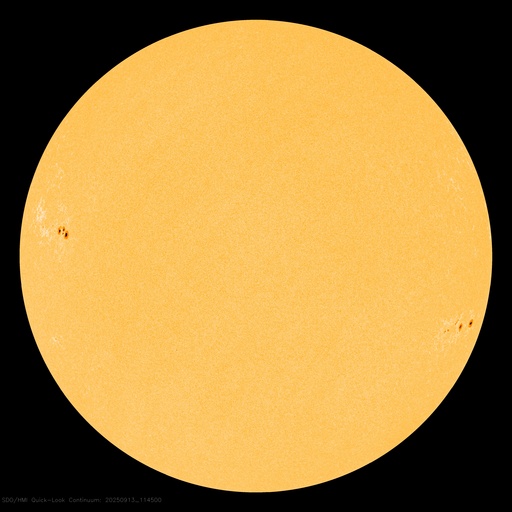
This is the Sun as it looks today — the newest full-disc image from NASA's Solar Dynamics Observatory, refreshed through the day. It's the same star the Moon will cover on August 12.
Source: NASA SDO. Image updates on a slow cadence through each day.
Except during the brief moments of totality on the central path, the Sun is never safe to view with the naked eye, ordinary sunglasses, or a camera/phone/telescope without a proper solar filter. Use certified ISO 12312-2 eclipse glasses, or watch by projection.
Keep exploring
Eclipse data: NASA Goddard eclipse canon (Espenak & Meeus) (eclipse.gsfc.nasa.gov). Coastline: Natural Earth. Live Sun imagery: NASA SDO. Sun altitudes are computed for the instant of greatest eclipse and are approximate; for exact local circumstances see NASA or timeanddate nearer the date.